Places of the Knauss Family
God’s Acre, the Moravian Church, our neighbors and our sister house, and the places beyond Emmaus where the family story began.
The Knauss story is rooted in a few acres of Emmaus, and in a handful of places beyond it. Some stand right beside the house. Others are an afternoon’s drive away. All of them can still be visited.
God’s Acre · The Moravian Church · Remembrance Garden · The 1803 House · Miller’s Park · 111 Main Street · Henry Antes’s plantation · Whitemarsh
Next door
God’s Acre
The Moravians who founded Emmaus laid out their burial ground in 1742, beside the small log church they built that year. In the Moravian tradition it is called God’s Acre, and it is where the founding families of Emmaus, the Knausses among them, were laid to rest.
Moravian burial grounds are known for their simplicity: flat, uniform stones, with the dead traditionally buried in order of death and grouped by “choir,” by age, sex and marital status, rather than by family. Rich or poor, every grave looks alike.
Sebastian’s sister, Sophia Knauss Andreas (1737–1815), lies under stone number 159. Ludwig Knauss and His Children → [Maggie: add the stone numbers for Sebastian, Heinrich and other Knausses.]
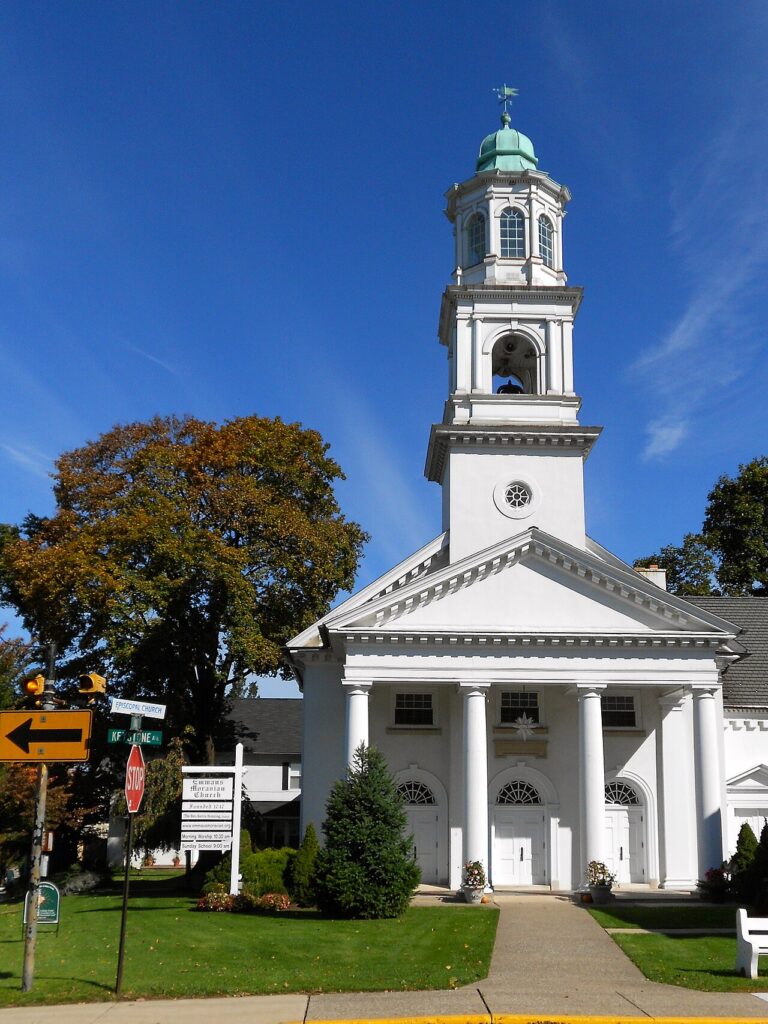
The Emmaus Moravian Church
The congregation was formed on July 30, 1747, with Sebastian Knauss and Jacob Ehrenhardt as its stewards. A schoolhouse opened the same year. The church that stands today, at the corner of Main and Keystone, was built in 1834. The village of Emmaus grew up around it, on the land the two families gave in 1759.
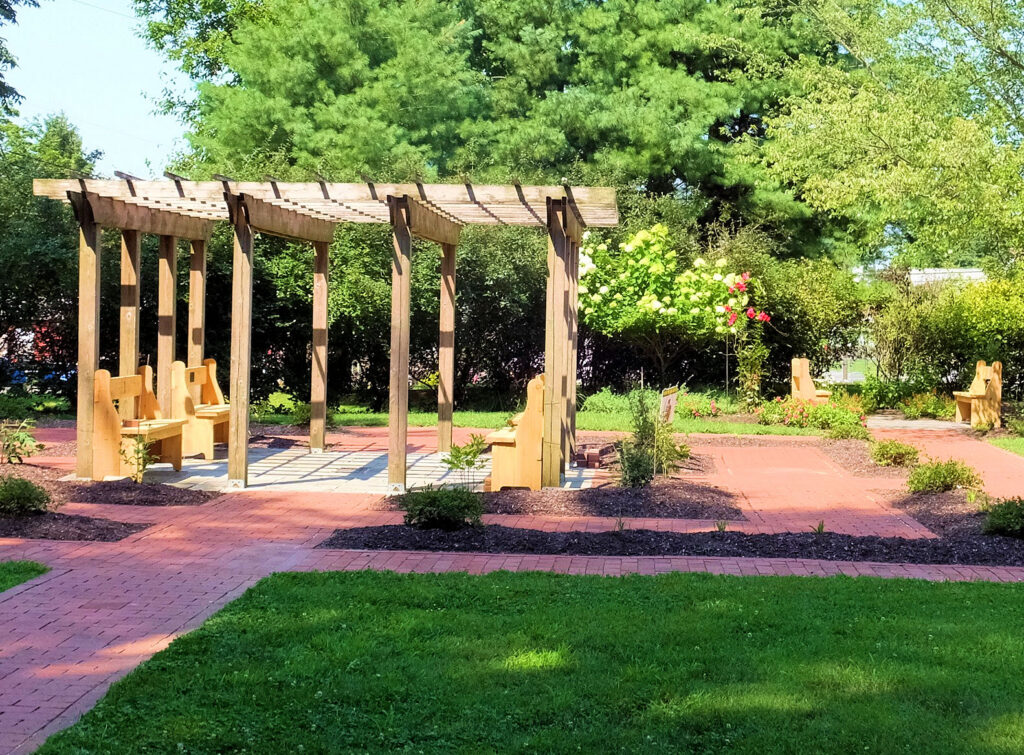
The Emmaus Remembrance Garden
Directly beside the homestead, the Emmaus Remembrance Garden is a quiet place to honor loved ones and mark special events and service. Visitors walk among engraved memorial bricks set among perennial roses and other plantings. The garden is cared for by the Emmaus Commemorative Gardens Foundation, which celebrated its twentieth anniversary in September 2024.
In Emmaus
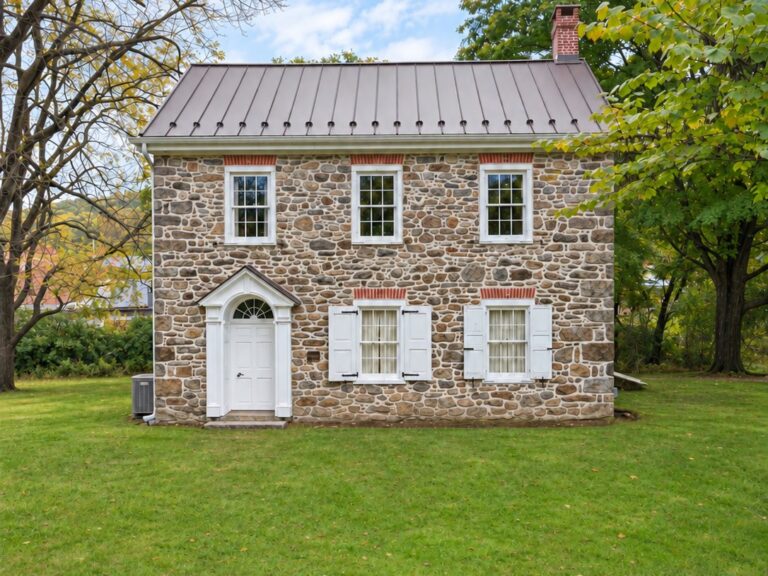
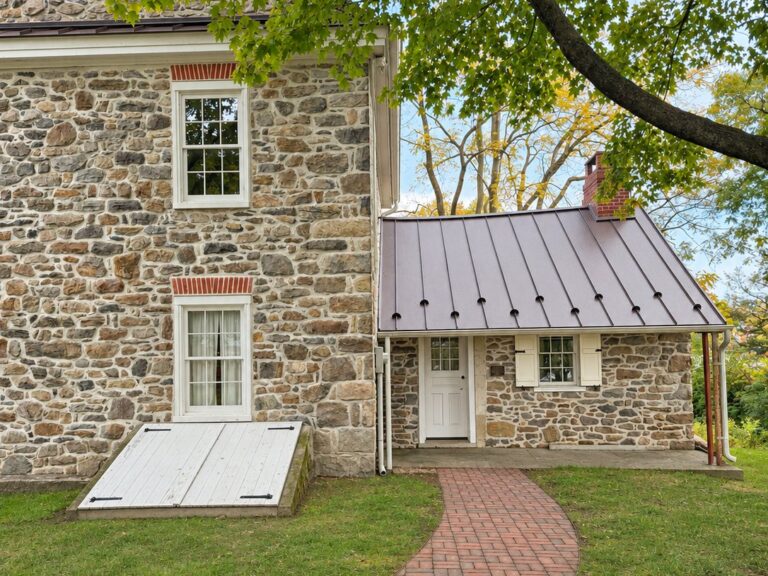
The 1803 House
Built for Jacob Ehrenhardt Jr., youngest of the ten children of the founder Jacob Ehrenhardt and his wife Barbara, the 1803 House is a fine Federal-style fieldstone house just outside the original Moravian village. Jacob Jr. was a Revolutionary War soldier and a shoemaker; he married Susanna Saeger in 1785 and built the house for her and their four daughters.
The Ehrenhardts and the Knausses were bound together from the start: Heinrich Knauss, who built our house in 1777, married Anna Marie Ehrenhardt in 1766.
Rodale donated the house to the Borough of Emmaus in 1974. The Friends of the 1803 House formed in 1976 to restore it, and it was listed on the National Register of Historic Places in 2003. Today it is a museum, open by appointment.
Miller’s Park
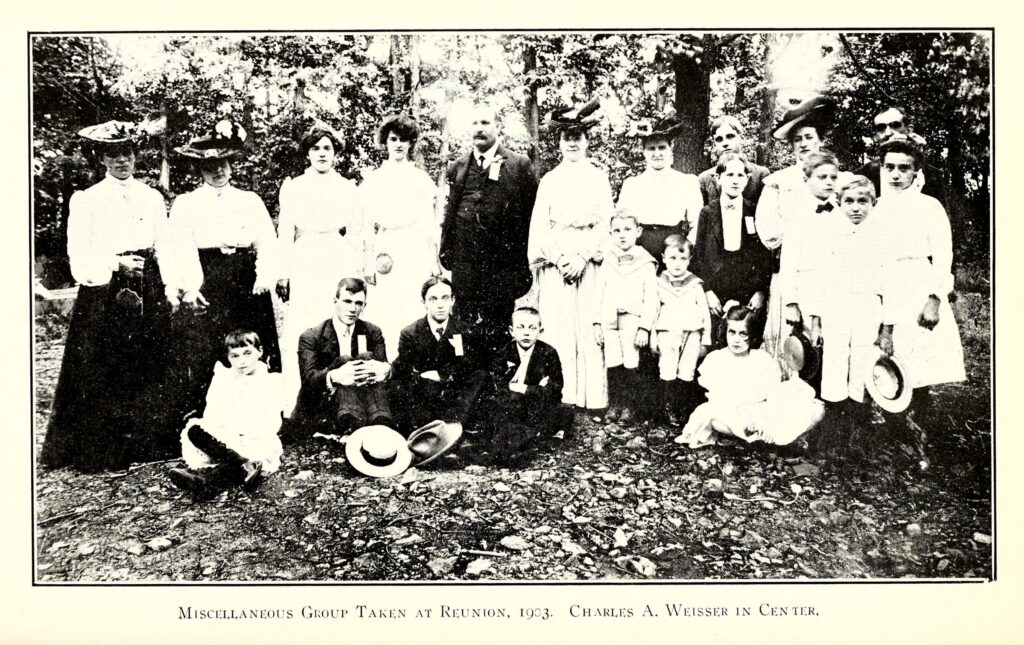
On August 22, 1903, the Knauss family held its first reunion at Miller’s Park in Emmaus, on ground that had once been part of Sebastian Knauss’s land. Some five hundred came. The reunions met in Emmaus through 1906 and at Waldheim Park in Mountainville from 1908 to 1914, and out of them came the 1915 family history.
[Maggie: where Miller’s Park stood, and what is there today.]
111 Main Street
When the family offered the old homestead and its 33 acres for sale in March 1935, the same advertisement offered a “house and lot at 111 Main St., Emaus.” It is a reminder that by the 1930s the Knausses were town people as well as farmers.
[Maggie: anything known about who lived at 111 Main Street.]
Beyond Emmaus
Henry Antes’s plantation
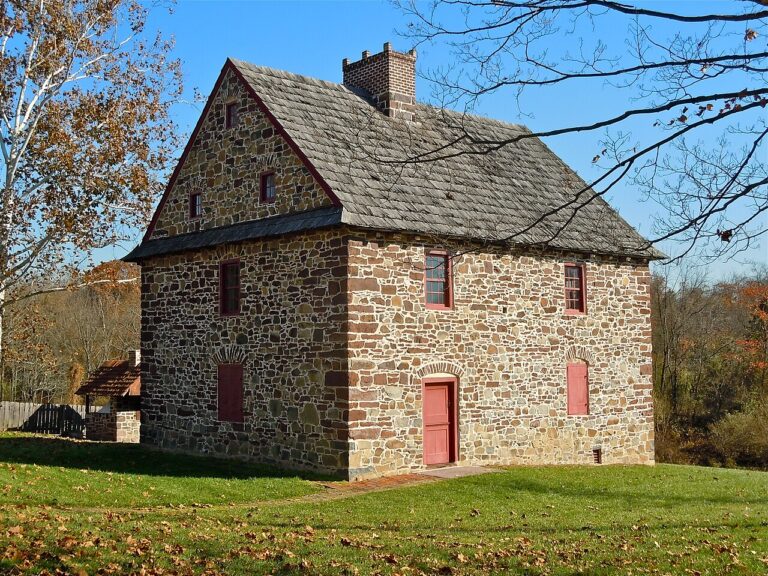
Henry Antes (1701–1755) came to Pennsylvania from the Palatinate around 1720 and built his home and a paper mill on the Wissahickon in 1736, in what is now Upper Frederick Township, Montgomery County. A builder and engineer of mills, a justice of the peace and a friend of Count Zinzendorf, he became the chief architect and builder of the Moravian Church in Pennsylvania and helped found Bethlehem.
The 1915 family history records that Sebastian Knauss trained as a wheelwright under Antes, in the years when Antes stood at the heart of the Moravian awakening in Pennsylvania.
Whitemarsh
Ludwig Knauss and Anna Margaretha brought their family from Tittelsheim, in the Wetterau, to Whitemarsh, near Philadelphia, in 1723. Ludwig owned a hundred acres there and was a deacon of the White Marsh Reformed church from 1728 to 1739.
James Owen Knauss and Tilghman John Knauss, History and Genealogy of the Knauss Family in America (1915); the 1803 House, “About the 1803 House” and “A Small Village Called Emaus” (1803house.org); “Henry Antes,” Wikipedia; Lehigh Valley Press, “Emmaus Remembrance Garden celebrates 20 years,” September 18, 2024; newspaper advertisement, March 21, 1935.
Is one of these your ancestor?
Add your branch to the Descendant Registry for the 250th year.